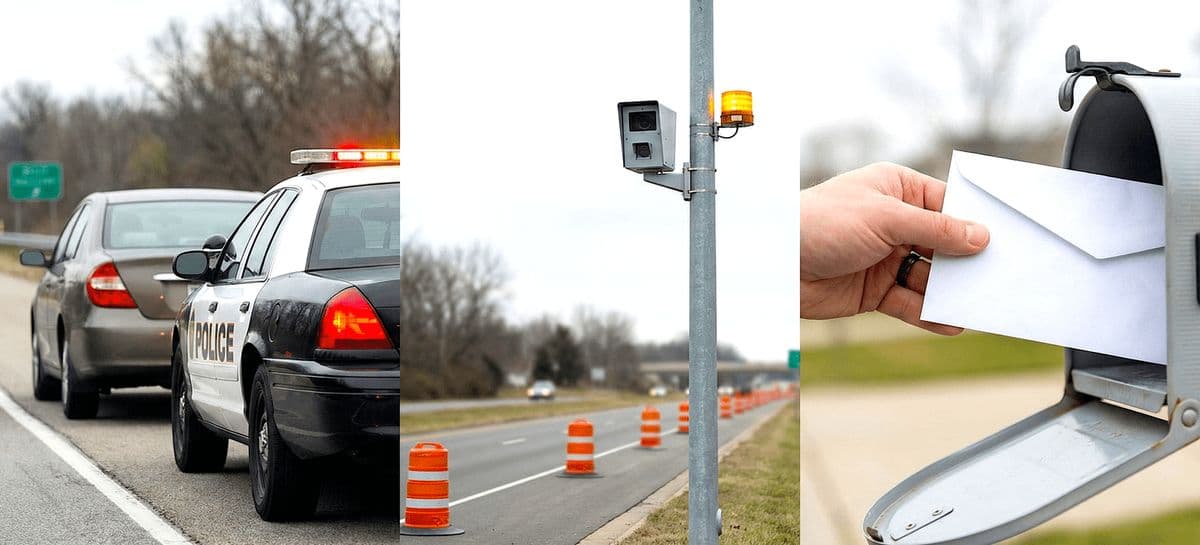
For decades, Minnesota drivers knew that to get a speeding ticket, they had to be pulled over by a squad car.
In late 2025, that rule effectively vanished in certain zones.
Following the legislative authorization of the “Traffic Safety Camera Pilot Program,” automated enforcement cameras are now live in Minneapolis and authorized for Mendota Heights and state highway work zones. Unlike the controversial red light cameras of the early 2000s, which the Minnesota Supreme Court ruled invalid in 2007 because a Minneapolis ordinance conflicted with state traffic law, this new system was authorized by the Legislature itself.
Where Are They?
Contrary to rumors on social media, these cameras are not everywhere. The pilot program is strictly limited to specific high-risk areas.
Minneapolis: Cameras went live Oct. 1, 2025, at five specific intersections including Nicollet Ave. S. & 46th St. W. and Broadway Ave. N. & Fremont Ave. N.
Mendota Heights: Authorized to enforce speed limits in designated zones.
MnDOT Work Zones: The state is authorized to place mobile camera units in active highway construction zones (e.g., I-94 or Hwy. 10 projects) when workers are present.
Saint Paul is not currently part of the pilot program as of publication. If you see a camera flash in Saint Paul, it is not issuing a state speed citation.
Owner Liability vs. Driver Liability
The biggest legal shift is who gets charged. The law creates a distinction between a “crime” and a “civil penalty.”
The Trooper Ticket (Traditional): Issued to the driver. Goes on your driving record. Affects insurance rates.
The Camera Ticket (Pilot): Issued to the vehicle owner. It is a petty misdemeanor, which is not a crime.
Fine: $40 (for 10-19 mph over) or $80 (for 20+ mph over).
First Violation: For most owners the first violation is a warning only, and a second can be handled through a traffic safety course. Commercial vehicles and commercial license holders do not get these breaks.
No License Action: For most drivers, a camera ticket is not grounds to revoke or suspend a license.
The ”Not Me” Defense
Because the camera records the rear license plate and the law bars recording in a way that identifies any person in the vehicle, the ticket goes to the owner.
However, you can contest the ticket. The law provides an affirmative defense if the owner files a sworn statement (affidavit) stating they were not driving the vehicle at the time.
Stolen Vehicles: An owner is not fined if the vehicle was stolen at the time of the violation.
Stolen Vehicles: An owner is not fined if the vehicle was stolen at the time of the violation.
Why It Matters: If you lend your car to a friend who speeds past a Minneapolis or Mendota Heights camera, the ticket comes to you as the owner unless you swear you were not driving. The first violation brings a warning, and a second can mean a $40 or $80 fine or a traffic safety course. A state work zone camera sends a warning only, never a fine.