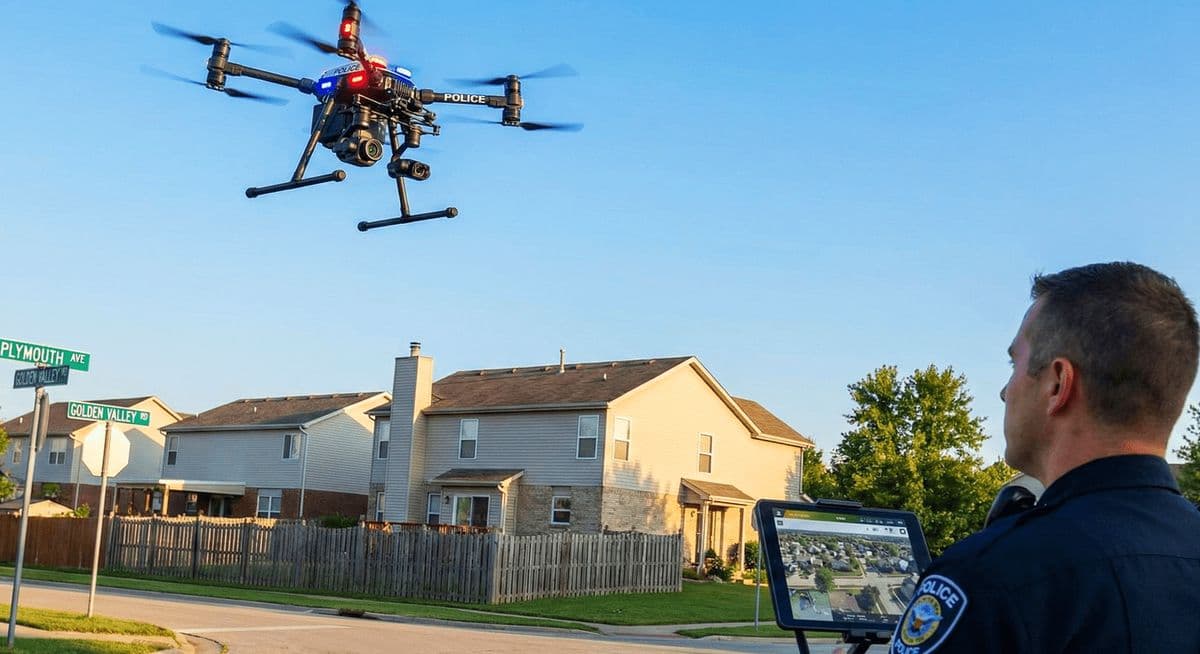
If you live in Minnetonka, Brooklyn Park or Golden Valley, you may have noticed a new sound during police calls: the distinct buzz of a quadcopter.
“Drone as First Responder” (DFR) programs have expanded rapidly in late 2025. In November, the Brooklyn Park City Council approved a $4.6 million drone first responder program.
While this technology allows officers to “see” a scene before they arrive, it has raised valid privacy concerns. Here is what Minnesota law actually says about the camera hovering over your neighborhood.
The ”Warrant Requirement”
Under MN Statute 626.19, law enforcement generally needs a search warrant to use a drone to gather evidence. This is the “default” rule. They cannot legally fly over your backyard barbecue just to “see if anything illegal is happening” without judicial approval.
The Exceptions
However, the statute provides significant loopholes that cover most scanner scenarios. Police do not need a warrant in these common situations:
Emergency Situations: If there is a “risk of death or bodily harm” (e.g., a missing child, an active shooter, or a suicidal party).
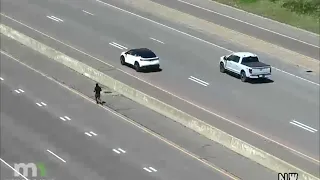
Public View & Reasonable Suspicion: Police can fly over public areas (streets, parks) if they have “reasonable suspicion” of criminal activity. This is the exception most often used to track fleeing suspects who run from traffic stops.
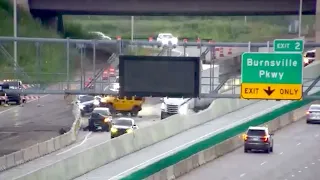
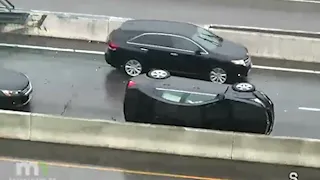
Crash Reconstruction: Documenting serious or fatal accident scenes on public roads.
Disaster Response: Assessing damage from fires, floods or tornadoes.
Emergency Situations: If there is a “risk of death or bodily harm” (e.g., a missing child, an active shooter, or a suicidal party).
Public View & Reasonable Suspicion: Police can fly over public areas (streets, parks) if they have “reasonable suspicion” of criminal activity. This is the exception most often used to track fleeing suspects who run from traffic stops.
Crash Reconstruction: Documenting serious or fatal accident scenes on public roads.
Disaster Response: Assessing damage from fires, floods or tornadoes.
The ”Transparency” Trade-Off
To address privacy fears, the 2025 DFR programs in cities like Minnetonka and Brooklyn Park come with a digital paper trail.
Public Dashboards: These departments have launched public-facing portals where residents can view flight paths, times and the “reason for dispatch” for every drone flight.
The 7-Day Rule: By law, any footage captured that does not become evidence in an active criminal investigation must be deleted within 7 days. It cannot be stored indefinitely in a government database.
Public Dashboards: These departments have launched public-facing portals where residents can view flight paths, times and the “reason for dispatch” for every drone flight.
The 7-Day Rule: By law, any footage captured that does not become evidence in an active criminal investigation must be deleted within 7 days. It cannot be stored indefinitely in a government database.
The Bottom Line: Without a warrant, police may fly a drone only for a reason the law lists, such as an emergency with a risk of death or bodily harm, a missing person search, crash reconstruction or reasonable suspicion of criminal activity in a public area.