In previous years, a drug dealer who sold a fatal dose of heroin might have faced a few years in prison for a controlled substance crime.
Prosecutors can reach for a much heavier hammer: Third-Degree Murder.
The clause behind these charges is not new; it has stood in its current form since 1987. Here’s how the law works and why it is catching so many dealers off-guard.
The Statute
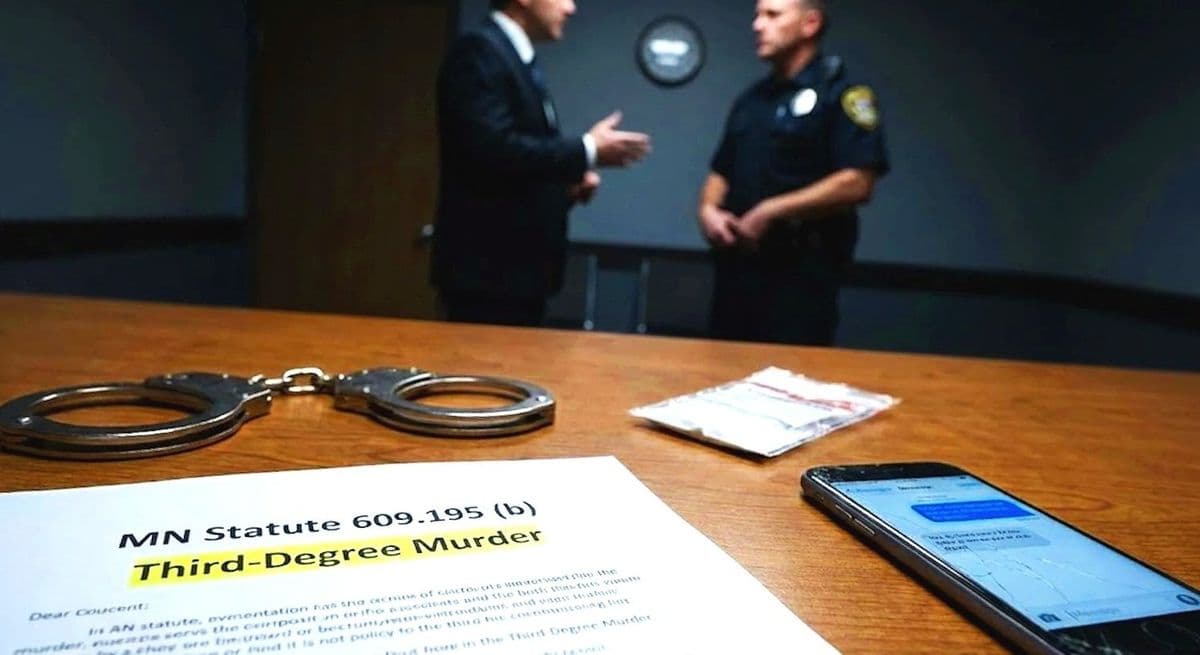
MN Statute 609.195 (b) specifically defines Third-Degree Murder as causing the death of another by “directly or indirectly” selling, giving away, bartering, delivering or administering a controlled substance classified in Schedule I or II.
Note: This includes Fentanyl (Schedule II), Heroin (Schedule I) and Methamphetamine (Schedule II).
Note: This includes Fentanyl (Schedule II), Heroin (Schedule I) and Methamphetamine (Schedule II).
No ”Intent” Required
Crucially, prosecutors do not need to prove the dealer wanted the victim to die. They do not even need to prove the dealer knew the drugs were lethal. To secure a conviction, the state only needs to prove three things:
The suspect sold or shared the drugs.
The victim died.
The specific drugs provided were a “proximate cause” of the death.
The suspect sold or shared the drugs.
The victim died.
The specific drugs provided were a “proximate cause” of the death.
The Sentence: A conviction carries up to 25 years in prison and a $40,000 fine.
The ”Proximate Cause” Battle
This is where 2025 courtrooms are seeing the biggest fights. Defense attorneys frequently argue “Intervening Causes.”
Example: If a victim bought fentanyl from Dealer A, but also took Xanax from a medicine cabinet and drank alcohol, the defense will argue that Dealer A’s drugs were not the sole cause of death.
The Legal Standard: The statute requires that the drugs proximately caused the death. Minnesota courts describe a proximate cause as something that played a substantial part in bringing about a death, and a death can have more than one cause. The drugs do not have to be the only cause.
Example: If a victim bought fentanyl from Dealer A, but also took Xanax from a medicine cabinet and drank alcohol, the defense will argue that Dealer A’s drugs were not the sole cause of death.
The Legal Standard: The statute requires that the drugs proximately caused the death. Minnesota courts describe a proximate cause as something that played a substantial part in bringing about a death, and a death can have more than one cause. The drugs do not have to be the only cause.
The ”Good Samaritan” Trap
Many Minnesotans are aware of the state’s “Good Samaritan Law,” which provides immunity from prosecution for drug possession if you call 911 to save someone overdosing.
Warning: This immunity does not protect you from Murder charges. If you provided the drugs that caused the overdose, calling 911 might protect you from some drug charges, but it can also give the police the evidence they need to charge you with third-degree murder after the patient dies. Giving first aid or other medical assistance can still count as a mitigating factor.
What to Listen For
On the scanner, you likely won’t hear “Third-Degree Murder” immediately. Instead, listen for:
Officers seizing the victim’s phone immediately as “evidence.”
Detectives from the Violent Crimes Division responding to what sounds like a medical call.
Officers seizing the victim’s phone immediately as “evidence.”
Detectives from the Violent Crimes Division responding to what sounds like a medical call.